Beauty Tips > Makeup Tips > Makeup Products > Concealers: How to Use & Find Good Makeup Concealer for Yourself
Following foundation, concealer is the most important piece of makeup a woman should have. Assuming you have a good concealer, you may even be able to skip foundation altogether, and head right for blush and bronzer!
However, it can be tricky finding a concealer that works for you, and one that fits your budget too. A good concealer can be found in drugstores as well as makeup counters, giving you a large selection to choose from.
Once you purchase concealer, if you're not applying it correctly, you may as well throw it away.
A lot of us make the same mistake of using a light shade of concealer to try and hide under-eye circles. Since the color you're trying to mask is dark like gray, green or purple, it seems like a lighter shade would tone the color down; however, the light color of concealer actually makes the dark circles look brighter, and can even illuminate them more! So it's a good idea to have more than one color or shade of concealer in your makeup case because, sometimes, only using one shade will make your face seem flat and one-dimensional. You will also find that having a few different shades of concealer for various problem areas of your face is quite beneficial.
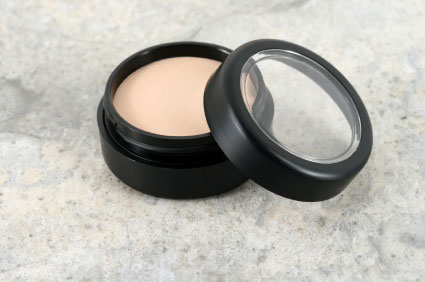
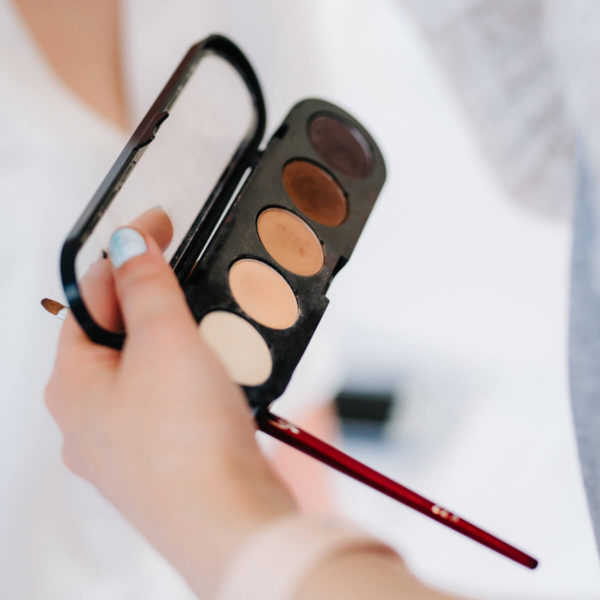
Choosing the right shade of concealer is just as important as finding the perfect shade of foundation, and just like foundation, it can be tricky when you're looking for one that works. Concealer helps to cover up age spots, birthmarks, blotchy skin, broken capillaries, dark under-eye areas, freckles and scars from acne. There are compacts or palettes sold with four different neutralizing colors that offer you a variety of concealing options.
Check out products like Napoleon Perdis Pro Palette Correct and Conceal or Sonia Kashuk Hidden Agenda Concealer Palette for great neutralizing palettes.
Neutralizing concealer palettes offer three or more colors to choose from, and are usually of a cream consistency. Neutralizing concealers are meant to correct discolorations on your face by using a color opposite of the discoloration in the color wheel. Since it can be overwhelming trying to figure out which color of concealer to use for acne, dark circles or other skin problems, here is your guide to knowing how to properly use a neutralizing color concealer palette.
Green concealer is great to use on problem areas that are red because green is opposite on the color wheel from red. So if you need to cover up hickeys, acne, pimples, rosacea and redness around your nose and chin, this color is perfect. Don't worry if you don't have green concealer because, in most cases, medium or heavy coverage foundations are able to mask redness. Even so, it's always helpful knowing how to use green concealer in case you need to use it in the future.
This color of concealer is tricky to use because it can leave a green or white tint on your skin that's hard to cover up with foundation. The key is to use it sparingly so as to avoid over-applying the product. The best methods for applying green is to use a concealer brush so that you can blend the edges out, thus causing the color to fade into your skin without leaving any harsh lines. Now you can use your skin-toned concealer over the top, or use your full coverage foundation without worrying about another layer of concealer.
Always use powder to set your makeup so that you don't have it sliding off of your face!
Green primers are similar to green concealer, but they don't compare in coverage strength. Green concealer neutralizes redness, while green primer only tones the redness down. One reason why green primer is good to use instead of green concealer is the fact that green primer allows you to apply concealer and foundation over top of it easily without a cakey appearance.
Yellow concealer can be a lifesaver on days that you're feeling under the weather or tired. Yellow concealer has the ability to liven up your face even when you're feeling the worst! The reason why yellow concealer has the ability to brighten your face is because it reduces red and pink tones. Similar to green concealer in how it's able to correct red tones, yellow concealer can help to conceal acne scars, rosacea, blotchy skin, and any other red or pink discolorations. So if green concealer still seems a little scary, or if you don't have any, you can use yellow in the same manor to achieve the desired effect.
Since yellow is opposite of purple and blue on the color wheel, dark circles, sun damage, dark spots, melasma, veins, or bruises can all be concealed by using yellow concealer. It is best to use yellow concealer sparingly though because it can cause cakey-face.
Pale or sallow skin can be brightened with the help of purple or lavender color correcting concealer because purple is opposite of yellow on the color wheel. Women with an olive complexion can benefit from using a small amount of purple concealer under their foundation, or tinted moisturizer. Purple or lavender concealer can also help conceal a bruise that has turned yellow, and it doesn't have to be on your face.
Most color corrective concealer comes in a palette or compact package, and can be applied the same way as you apply a skin toned concealer.
When you're applying any type of product to the delicate skin under or around your eye, it's important not to use excessive pressure. In other words, use your ring finger to blend, smooth, or pat product under your eye instead of the middle finger. When it comes to concealer, there are no exceptions to this rule! Always gently dab or pat the concealer under your eye, and avoid rubbing the product into the skin because it pulls and tugs at your skin causing premature wrinkles. Additionally, this may be what is causing your dark circles to appear in the first place so long story short, use your ring finger to apply.
Comments: